
Krayden supplies solder wire and solder bars for PCB assembly, electronics manufacturing, hand soldering, rework, wave soldering and selective soldering. Flux-cored solder wire supports controlled solder delivery for manual and robotic joining, while solder bars replenish molten solder baths used in wave and dip processes. Explore lead-free and tin-lead alloy options and select the appropriate material based on soldering process, alloy composition, flux chemistry, wire diameter, solder-pot conditions and application reliability requirements.

Solder shapes & wires
SnPb, In, BiSn and lead-free Solder materials
Solder Elements
12 products
-


ALPHA SACX Plus 0307
- Low dross formation
- Excellent mechanical reliability
- Made with Vaculoy technology
-

-

ALPHA SACX0807
- Low-silver lead-free solder alloy designed to provide soldering and reliability performance similar to higher-silver ALPHA SAC alloys while reducing material cost versus SAC305.
- Low dross rate, low copper erosion rate, and low surface tension support alloy utilization, fast wetting, high wetting force, and excellent hole fill.
- Suitable for lead-free wave and selective soldering across single- and double-sided boards, including assemblies with OSP pad finishes exposed to prior reflow excursions.
-

ALPHA TRUEHEIGHT
- Non-collapse copper spacer provides precise, repeatable component standoff height with thickness tolerances as low as +/- 0.010 mm.
- Nickel/gold finish covers all sides of the copper disc to maintain a solderable surface without exposed copper after reflow.
- Tape-and-reel packaging enables automated placement with standard pick-and-place equipment for integration into SMT assembly processes.
-

-

Hi-Flo Solder Bar Sn63Pb37
- Reduced Wave-Soldering Bridging and Icicling
- Vaculoy Ultra-High-Purity Manufacturing
- Conventional or Inert-Atmosphere Wave Soldering
-

Kester K100LD Lead-Free Solder Wire
- Eutectic Sn/Cu alloy
- Controlled metallic dopants
- Refined grain structure
-

-


LOCTITE C400
- Consistent Multi-Core Flux Distribution
- Improved Challenging-Surface Wetting
- Manual or Robotic Soldering
-

SACX Plus 0807
- Low-Silver, Lead-Free Alloy
- 216 to 225 deg C Solidus-Liquidus Range
- Vaculoy Oxide-Reduction Processing
-


Sn96.5/Ag3.5-PF | Solder Preform
- Mid-range temperature alloy for BGA/CSP and die attach components in high power devices
- High joint strength
- Highly resistant to thermal fatigue
-

SnCX Plus 07
- Silver-Free Lead-Free Wave-Soldering Alloy
- Reduced Copper Dissolution at High Temperature
- Vaculoy Low-Dross Fast-Wetting Processing
Product selector guide
PRODUCT SELECTOR GUIDE
Solder Wire & Solder Bar Product Selector
Start with the application, then compare flux chemistry for solder wires and alloy families for solder bars. The tables cover publicly documented Kester and ALPHA product lines, including specialist options not listed in Krayden's current product grid.
Availability note: Manufacturer listings do not confirm Krayden stock or regional availability. Alloy, diameter, core percentage, approvals, packaging and order quantities require confirmation. This is a product-family guide, not a complete SKU inventory.
01 / SOLDER WIRE
Kester & ALPHA Solder Wire
Select by flux chemistry, flux activity, cleaning requirements and the soldering process. IPC classifications apply to the named flux systems; verify available alloy and wire-diameter combinations.
| Brand / product | Flux system | Typical application | Selection consideration | Scope |
|---|---|---|---|---|
| Kester 245 | No-clean / ROL0 | Hand soldering; touch-up | Low-residue rosin-based no-clean flux; multiple leaded/lead-free alloy options | Electronics |
| Kester 268 | No-clean / ROL0 | Robotic and hand soldering | Zero-halogen chemistry; clear residue and low spatter | Electronics |
| Kester 275 | No-clean / ROL0 | Manual soldering | Clear residue, good wetting and reduced spatter | Electronics |
| Kester 278 (Innolot) | No-clean / ROL0 | High-reliability robotic/manual | Innolot alloy platform; zero-halogen; automotive applications | Electronics |
| Kester 282 | Rosin / ROL1 | Hand soldering; difficult assemblies | Mildly activated rosin core; higher activity than unactivated rosin | Electronics |
| Kester 285 | Rosin / ROL0 | Difficult-to-wet joints | Activated rosin system with ROL0 classification | Electronics |
| Kester 331 | Water-soluble / ORH1 | Electronics with cleaning process | High-activity organic flux; thorough water cleaning required | Electronics / clean |
| Kester 44 | Rosin / ROM1 | General hand soldering | Activated rosin; strong, rapid wetting | Electronics |
| Kester 48 | Rosin / ROM1 | Lead-free hand soldering | Activated rosin designed with lead-free applications in mind | Electronics |
| Kester 88 | Rosin / ROM1 | Oxidized or difficult surfaces | Higher rosin flux activity than Kester 44 | Electronics |
| Kester OR-421 | Water-soluble / ORH1 | High-activity joining | For brass, nickel and other difficult surfaces; cleaning essential | Cleaning required |
| Kester Solid Wire | No flux core | Externally fluxed soldering | Alloy wire without flux; choose separate suitable flux | Electronics / special |
| Kester Acid-Cored Wire | Acid core / verify TDS | Mechanical joining only | Industrial acid-core family; do not use on PCB circuitry without specific qualification | Not for PCB |
| Kester AW | Inorganic acid core | Industrial/mechanical soldering | Corrosive residues; Kester explicitly excludes electronic soldering | Not for PCB |
| ALPHA Telecore HF-850 | No-clean / ROL0 | Manual and robotic soldering | Halogen- and halide-free; low spatter; many alloy choices | Electronics |
| ALPHA Telecore XL-825 | No-clean / ROL1 | Hand/drag soldering | Fast wetting and clean, non-tacky residues; JIS AA-oriented | Electronics |
| ALPHA Telecore Plus | No-clean / check TDS | SMT hand soldering | Low-residue, optically clear flux and high SIR positioning | Electronics |
Important: Acid-core and inorganic-acid solder wires are industrial products and are generally not suitable for electronics/PCB assemblies. Confirm flux-residue cleaning requirements for water-soluble and higher-activity wires.
02 / SOLDER BAR
Kester & ALPHA Solder Bar Alloys
Select the solid solder or bar alloy against the existing bath composition, soldering process, wetting requirements and reliability needs.
| Brand / alloy platform | Alloy family | Typical application | Selection consideration |
|---|---|---|---|
| Kester Ultrapure SnPb Bar | Sn-Pb | Leaded wave / dip | Controlled-purity tin-lead bath alloys; regulatory authorization required |
| Kester Ultrapure Lead-Free Bar | Sn-Cu / SAC / Sn-Ag / Sn-Sb | Lead-free wave / dip | Manufacturer catalog contains multiple compositions; select by bath and assembly |
| Kester K100LD Bar | Modified Sn-Cu, silver-free | Wave and selective | Silver-free lead-free alloy option; monitor bath composition |
| ALPHA Vaculoy SAC305 | Sn-Ag-Cu (SAC305) | Lead-free wave / selective | Established higher-silver alloy; strong application track record |
| ALPHA Vaculoy SAC387 | Sn-Ag-Cu (SAC387) | Lead-free wave / selective | Higher-silver SAC option; confirm chosen bath specification |
| ALPHA Vaculoy SAC405 | Sn-Ag-Cu (SAC405) | Lead-free wave / selective | High-silver SAC option; confirm target alloy and replenishment plan |
| ALPHA SACX Plus 0307 | Low-silver SAC micro-alloy | Wave / selective / rework | Lower silver content; designed for reduced copper dissolution and dross |
| ALPHA SACX Plus 0807 | Low-silver SAC micro-alloy | Wave / selective / replenishment | Approx. 0.8% silver family; good process window and low dross |
| ALPHA SnCX Plus 07 | Silver-free modified Sn-Cu | Wave / selective / lead tinning | No-silver wave bath alloy intended for cost and process control |
| ALPHA SnCu0.7 | Sn-Cu | Standard wave / dip | Conventional tin-copper baseline; compare oxidation and bath costs |
| ALPHA HiFlo Sn63Pb37 | Sn-Pb | Demanding permitted leaded wave | High-purity, high-fluidity leaded bar alloy |
| ALPHA Vaculoy Sn63Pb37 | Sn-Pb | General permitted leaded wave | Controlled-purity, lower-dross Vaculoy solid solder |
| ALPHA HRL3 Solid Solder | Low-temperature Sn-Bi-based | Low-temperature dip / selective | Special low-temperature alloy for heat-sensitive applications; lead mixing caution |
Bath replenishment: ALPHA Vaculoy SAC300/SAC350/SAC380/SAC400 and selected SACX/SnCX variants may be used for bath replenishment. Do not substitute an alloy without checking the target bath composition and supplier instructions. Kester Ultrapure bar ranges also include additional Sn-Ag and Sn-Sb options.
03 / QUICK SELECTION
Material Selection Shortlist
Use these examples to identify product families for further technical evaluation. Confirm final suitability with the manufacturer and Krayden.
| Requirement | Product types worth evaluating |
|---|---|
| No-clean manual / repair soldering | Kester 245, Kester 275, ALPHA Telecore Plus |
| Low-spatter robotic soldering | Kester 268, ALPHA Telecore HF-850; Kester 278 when Innolot is specified |
| Higher flux activity / difficult pads | Kester 282/285/44/48/88 or ALPHA Telecore XL-825, subject to cleaning and residue requirements |
| Water-cleaning process | Kester 331 or OR-421, with post-solder cleaning validation |
| Standard lead-free wave or selective | ALPHA SAC305, SAC387, SAC405; Kester Ultrapure SAC bar |
| Low-silver / silver-free wave soldering | ALPHA SACX Plus 0307/0807, ALPHA SnCX Plus 07, Kester K100LD |
| Low-temperature selective or dip | ALPHA HRL3, subject to strict tin-lead mixing and equipment checks |
| Leaded process where permitted | ALPHA HiFlo / Vaculoy Sn63Pb37; Kester Ultrapure SnPb |
For solder wire inquiries: specify alloy, diameter, flux product/class, flux-core percentage, spool size and residue/cleaning requirements. For solder bar inquiries: specify alloy, bar format, solder-pot chemistry, equipment, soldering temperature and throughput.
Frequently asked questions
Frequently asked questions about Soldering Elements (Solder Wire & Bar)
When should I choose solder wire instead of solder bar?
Choose solder wire for localized joints made by hand soldering, robotic soldering or rework. Solder bar is mainly used to fill or replenish solder pots for wave, dip and selective soldering. Both forms require an alloy and flux approach suited to the assembly.
What is the difference between flux-cored and solid solder wire?
Flux-cored wire contains flux that activates during heating and helps remove oxides at the joint. Solid solder wire has no flux core, so an appropriate external flux or separately engineered process is needed. Verify the flux chemistry and alloy for each product.
What do ROL0, ROL1, ROM1 and ORH1 mean?
These are IPC J-STD-004 flux classifications. The letters identify flux base and activity, and the final digit indicates the halide test result category. Do not interpret the code alone as a guarantee of coating compatibility, residue cleanliness or suitability for every application.
Does no-clean solder wire always mean cleaning is unnecessary?
No. No-clean residues are intended to remain for many qualified assemblies, but cleaning may still be necessary for conformal coating, sensitive electrical circuits, inspection or stringent reliability requirements. Validate the exact solder wire and cleaning or coating process on the finished assembly.
Is a ROL0 flux-cored wire the same as halogen-free wire?
Not necessarily. ROL0 is an IPC flux classification, whereas halogen-free or zero-halogen claims relate to different limits and test definitions. Confirm each requirement against the product technical datasheet or supplier declaration rather than assuming the terms are interchangeable.
Can acid-core solder wire be used on electronic PCBs?
Industrial inorganic-acid wires such as Kester AW (Kester Acid-Cored) are not recommended for electronic circuitry because their residues can be corrosive. Use an electronics-qualified rosin, no-clean or water-soluble solder wire instead, selected for the cleaning process and reliability target.
How do I select the correct solder wire diameter and flux content?
Select wire diameter from the joint size, soldering-tip geometry and wire-feed equipment. Fine wires support small deposits; larger wire supports higher solder volume. Flux-core percentage influences activation and residue, but more flux is not always better. Confirm available size/core combinations from the TDS.
Which solder wire is appropriate for robotic soldering?
Prioritize wire-feed consistency, low spatter, good wetting, repeatable flux-core distribution and stable residue behavior. Manufacturer-positioned options include Kester 268 and ALPHA Telecore HF-850. Match them to alloy, temperature, tip geometry, feed speed and qualification trials.
How are SAC, low-silver SAC and Sn-Cu bar alloys different?
SAC305 and related alloys contain more silver than low-silver SACX families; modified Sn-Cu systems such as K100LD and SnCX Plus 07 are silver-free. Compare bath cost, copper dissolution, wetting, mechanical reliability, dross and the customer’s design requirements—not silver content alone.
Does solder bar contain the flux needed for wave soldering?
Generally no. A wave or selective solder bath contains molten solder alloy, while a compatible liquid flux is separately applied to the PCB or soldering site. Flux quantity, preheat and solder-pot conditions are important to avoid poor wetting, bridging and contamination.
Can I change from SnPb to SAC or Sn-Cu by topping up the solder pot?
Do not assume that adding a new alloy will safely convert an existing bath. Residual lead, copper and other metals can move the bath outside its specified composition. Use a controlled conversion plan, equipment compatibility assessment, bath sampling and supplier guidance.
How do I control copper buildup and solder bath contamination?
Monitor the molten bath using periodic composition analysis, control component and PCB exposure, and use suitable replenishment materials. Copper pickup, cross-alloy contamination and other impurities can affect wetting, dross, solder-pot maintenance and joint quality. Set action limits for the exact alloy.
What causes excessive dross in wave soldering?
Dross formation is influenced by oxygen exposure, bath temperature, turbulence, alloy chemistry and contamination. Review machine settings and replenishment practices before attributing it to the bar alloy. Lower-dross alloy processing may help, but machine conditions and bath analysis remain essential.
What if hole fill or wetting is poor during wave soldering?
Check flux coverage and activation, PCB surface finish, component lead condition, actual top-side and bottom-side temperatures, solder-contact time and solder-pot condition. Do not respond by raising the temperature alone; confirm the process profile and solder alloy specification first.
Can flux-cored solder wire residues remain under conformal coating?
Not automatically. Some coatings tolerate selected no-clean residues, while others require cleaning. Evaluate the exact flux/coating combination for wetting and adhesion, insulation resistance, humidity exposure and thermal cycling under the final operating conditions.
What details should I provide when requesting a solder wire or bar recommendation?
Share the joining process, PCB and component finish, preferred lead-free or SnPb alloy, reliability requirements, wire diameter and flux needs—or for solder bar, bath alloy, pot temperature, contact time and bath analysis. Also provide cleaning/coating requirements, consumption and target packaging.
Learn more
SOLDER ELEMENTS - APPLICATION OVERVIEW
Solder Wire & Solder Bar: Choose by Process
Solder wire is commonly used for manual, robotic and rework soldering. Solder bar supplies the molten alloy for wave, selective and dip soldering. Compare the two material formats below before selecting the alloy, flux chemistry and process conditions.
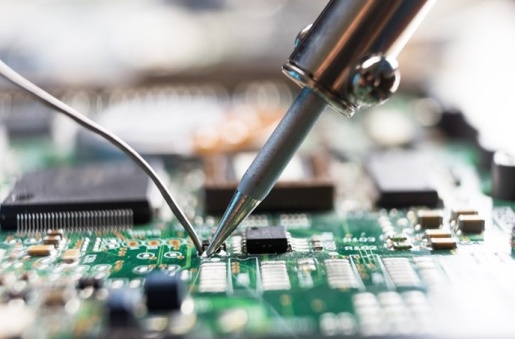
Image source: MacDermid Alpha Electronics Solutions (www.macdermidalpha.com)
Solder Wire
Used for hand soldering, rework, touch-up and automated or robotic soldering. Flux-cored wire combines the alloy with a flux system to promote wetting at the joint.
Key selection factors: wire diameter, solder alloy, flux classification, flux-core percentage, spatter and residue requirements.
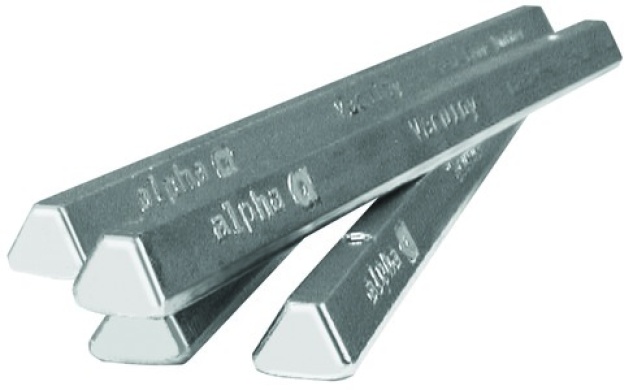
Image source: MacDermid Alpha Electronics Solutions (www.macdermidalpha.com)
Solder Bar
Used to charge and replenish molten solder baths in wave, selective and dip soldering. Liquid flux is generally applied separately to the assembly before contact with molten solder.
Key selection factors: alloy composition, solder-pot temperature, copper dissolution, impurity control and dross formation.
PROCESS COMPARISON
Solder Wire vs. Solder Bar: Practical Differences
The soldering method determines the alloy form, flux delivery method and process controls you need to evaluate.
| Process topic | Solder wire | Solder bar |
|---|---|---|
| Typical equipment | Hand soldering iron, robotic soldering system | Wave solder machine, selective-solder pot, dip-solder equipment |
| Flux delivery | Usually supplied inside the wire core; solid wire needs a separate flux | Separate liquid flux usually applied before contact with molten solder |
| Important variables | Flux class, wire diameter, core loading, alloy and spatter | Alloy/bath composition, contamination, pot temperature, dross and hole fill |
| Typical concerns | Insufficient wetting, solder bridges, spatter, residue | Insufficient hole fill, bridging, copper pickup, dross |
MATERIAL SELECTION
Choosing the Right Solder Element
Selection involves more than alloy composition. Solder wire must match the joint geometry and flux/residue requirements; solder bar must match the solder bath, liquid flux and process conditions.
| Selection parameter | Why it matters |
|---|---|
| Alloy / melting range | Affects process window, component heat exposure and joint reliability; review the precise selected TDS. |
| Flux class / residue | Controls oxide removal and cleaning needs, and may affect conformal coating compatibility. |
| Wire size / flux percent | Influences solder delivery rate, spatter and solder volume. |
| Bath copper and impurity control | Limits alloy drift and helps stabilize wetting, dross and solder defects. |
| Equipment / process qualification | Check solder tip or bath temperature, contact time, preheat and flux application. |
Technical note: Product chemistry, flux classifications, available forms and process recommendations vary by grade. Confirm all specifications against the selected manufacturer's technical data sheet.
Need Help Comparing Solder Wires and Bars?
Share your soldering process, alloy preference, wire diameter or solder-pot conditions, cleaning expectations and reliability requirements. Krayden's application team can help identify suitable materials for evaluation.
Contact Our Application Team → | Soldering Materials → | Solder Flux →


